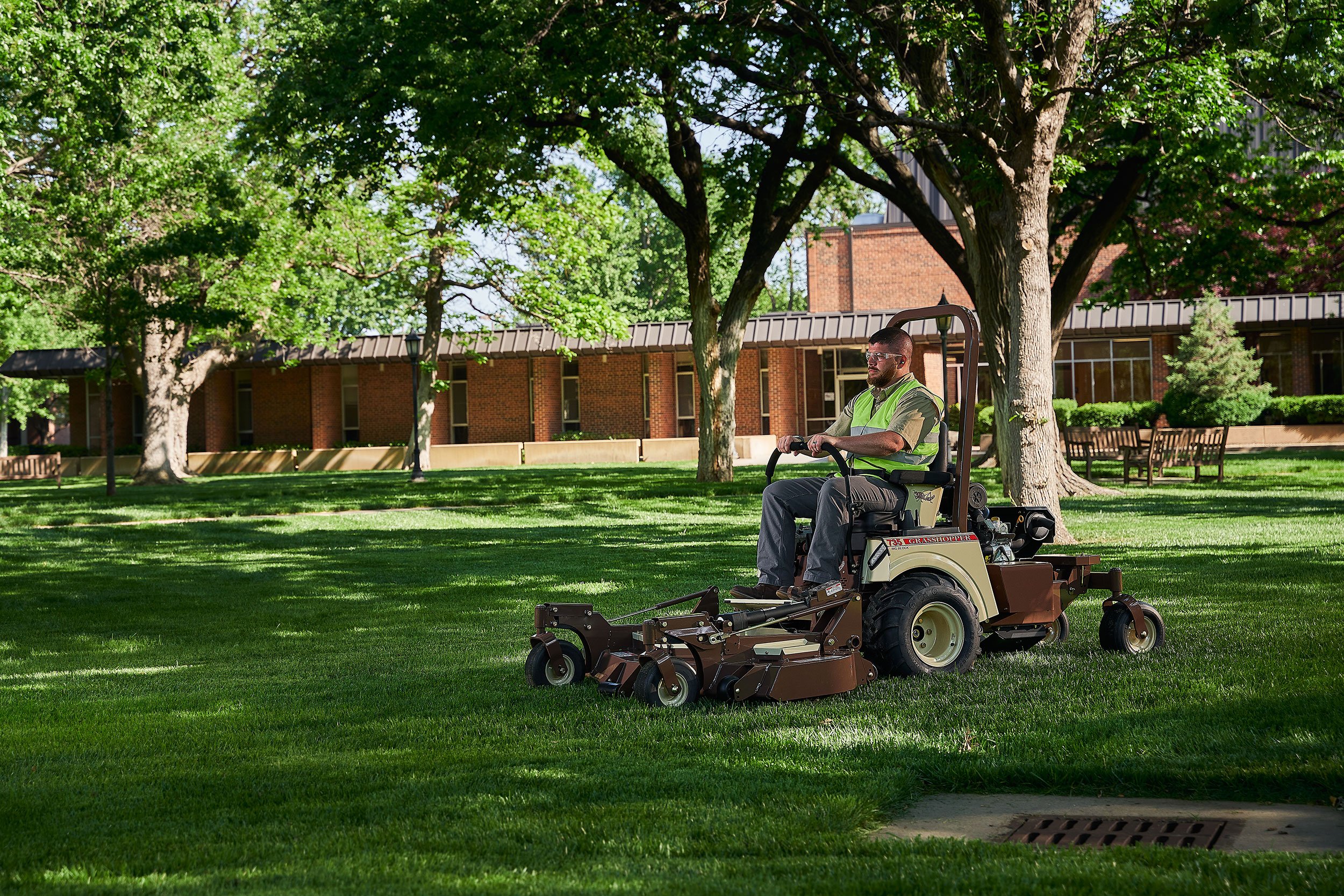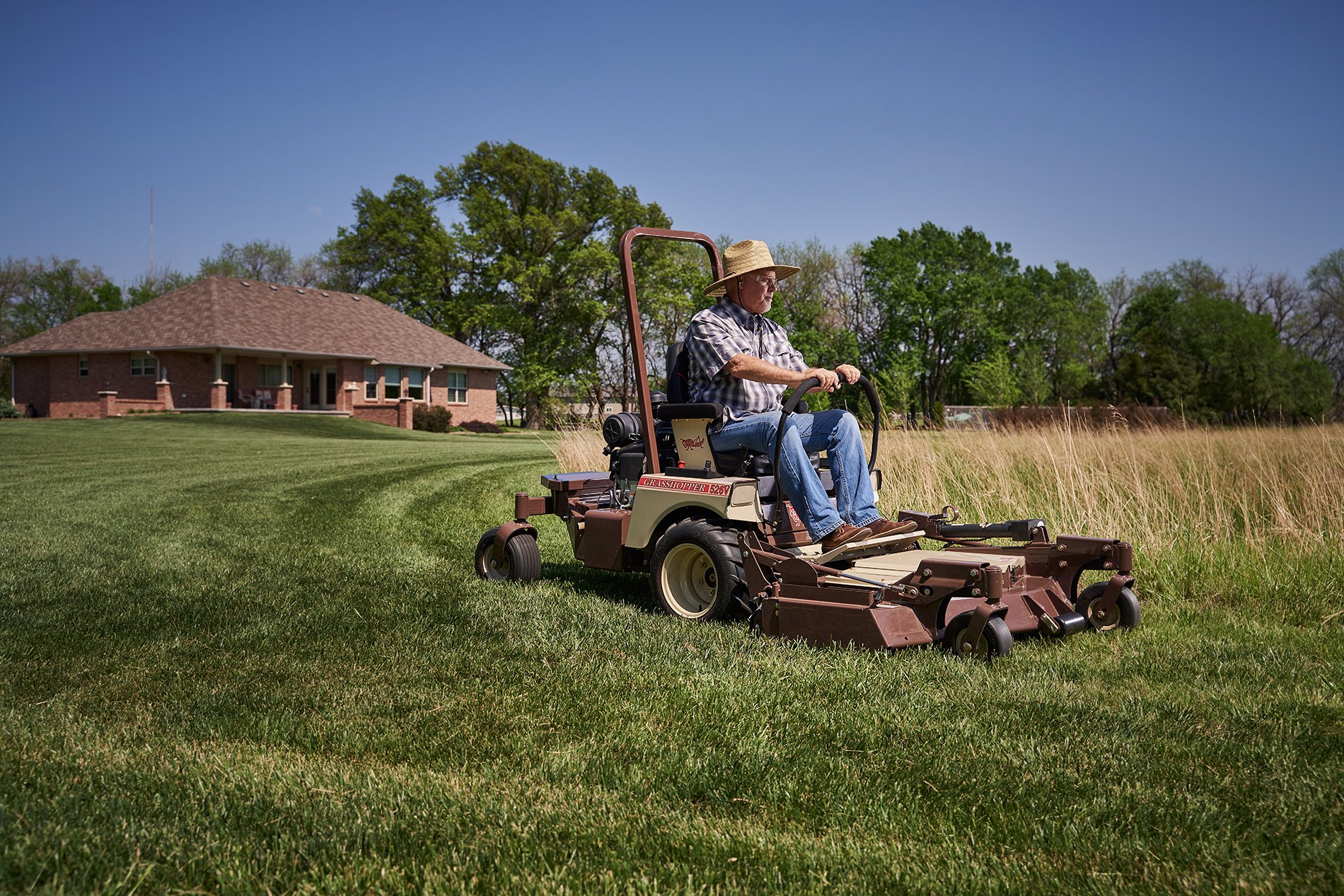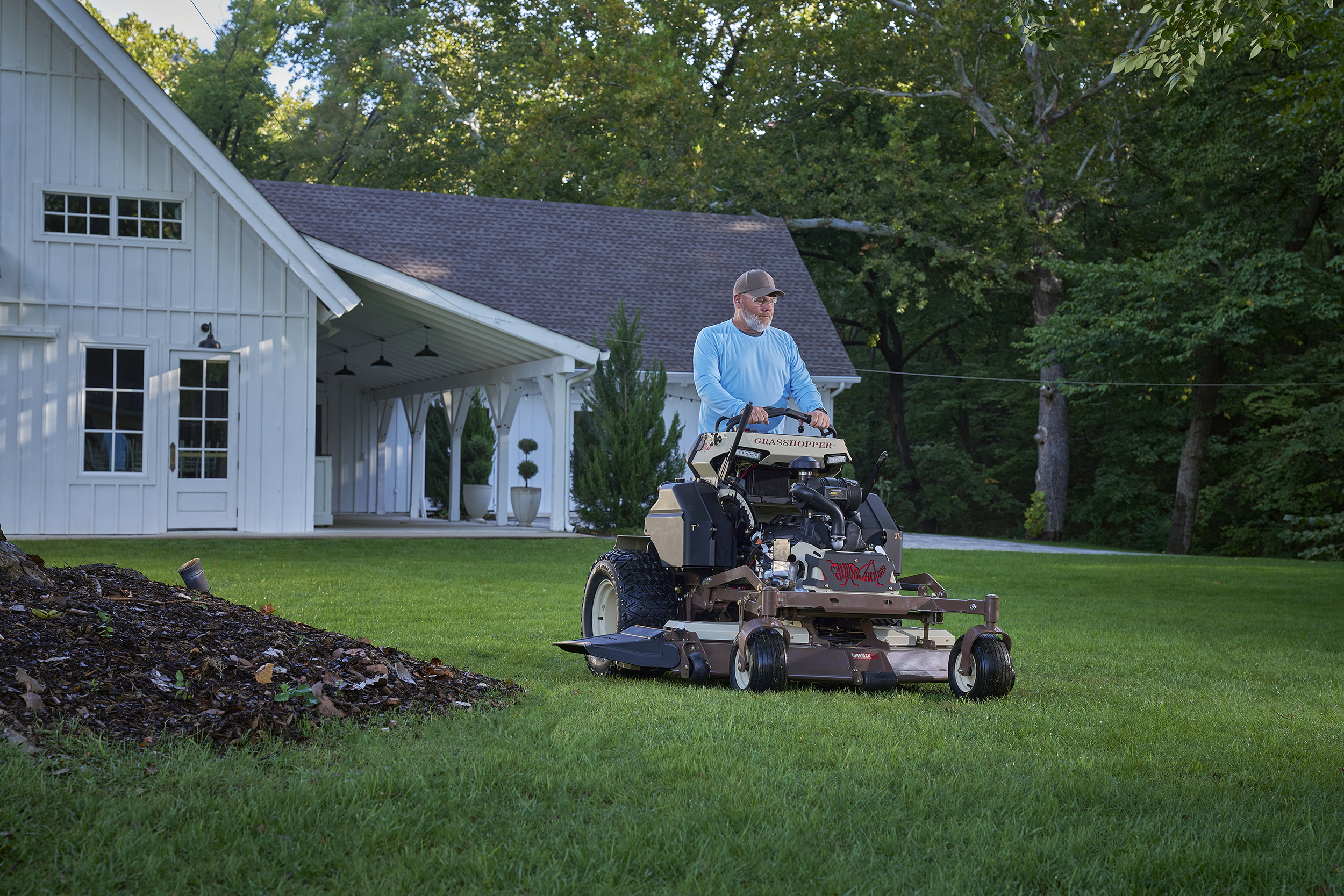
Buying a machine that suits your budget, land, and expectations
When you’re shopping for a mower, it’s easy to focus on the numbers that seem to matter most: deck size, horsepower, and price. On paper, two machines can look nearly identical. But those numbers only tell part of the story.
What’s not necessarily visible upon first glance is how those mowers are built, and how that build quality affects performance, durability, and cost over time. If you’re maintaining multiple acres of lawn or tackling uneven terrain, the difference between a lower-cost option and a premium mower becomes clear with every hour of use.
So, what are you really paying for when you choose a lower-cost mower, and what might it cost you later?
Let’s answer your questions about mower sticker prices and the cost of ownership over time so you can make the best decision for your budget and property maintenance needs.
What unexpected costs come with a lower-priced mower?
A lower upfront mower cost often means trade-offs that aren’t immediately obvious. Engines, transmissions, frame construction, and deck design can vary significantly, even when spec sheets look similar.
For example, two mowers may both list 25 horsepower, but that doesn’t mean they perform the same. Engine design, configuration, and overall construction can differ dramatically, affecting torque, efficiency, cut quality, and longevity.
The same is true for transmissions, which are rarely front and center in marketing materials but play a critical role in how a mower handles, responds in challenging mowing conditions, and holds up over time.
After hours of mowing with a mower marketed as a “deal,” you’ll notice lagging performance with more strain on components. That’s because a mower that is consistently pushed to its limits or beyond what it was designed to handle will wear down faster, particularly when used on larger properties, thicker grass, and uneven terrain.
In other words, what looks like savings upfront can translate into compromised performance and a shorter usable lifespan.
How does a mower’s construction affect the true cost?
Build quality is the foundation of long-term value.
Engines and transmissions are mounted to a frame that has to handle constant vibration, variable ground conditions, and heavy use. When a mower’s “body” is built with thinner materials or minimal reinforcement, stress points develop faster.
Deck construction is another major differentiator. Stamped decks are faster and less expensive to produce, but they typically use thinner steel. Fabricated and welded decks, by contrast, are built from thicker materials and reinforced in high-stress areas, improving strength and longevity. Strategic reinforcement—particularly in areas where vibration and impact are most common—helps ensure a mower’s structural integrity over time.
And as mowing conditions become more demanding, those construction differences matter more. Constant movement over uneven ground creates ongoing stress at connection points, from deck mounts to frame joints. Eventually, this can lead to cracking or premature wear that shortens the life of the machine.
Also keep in mind, mower construction isn’t just how long it will last, but how it performs along the way.
What are the maintenance differences between entry-level and premium mowers?
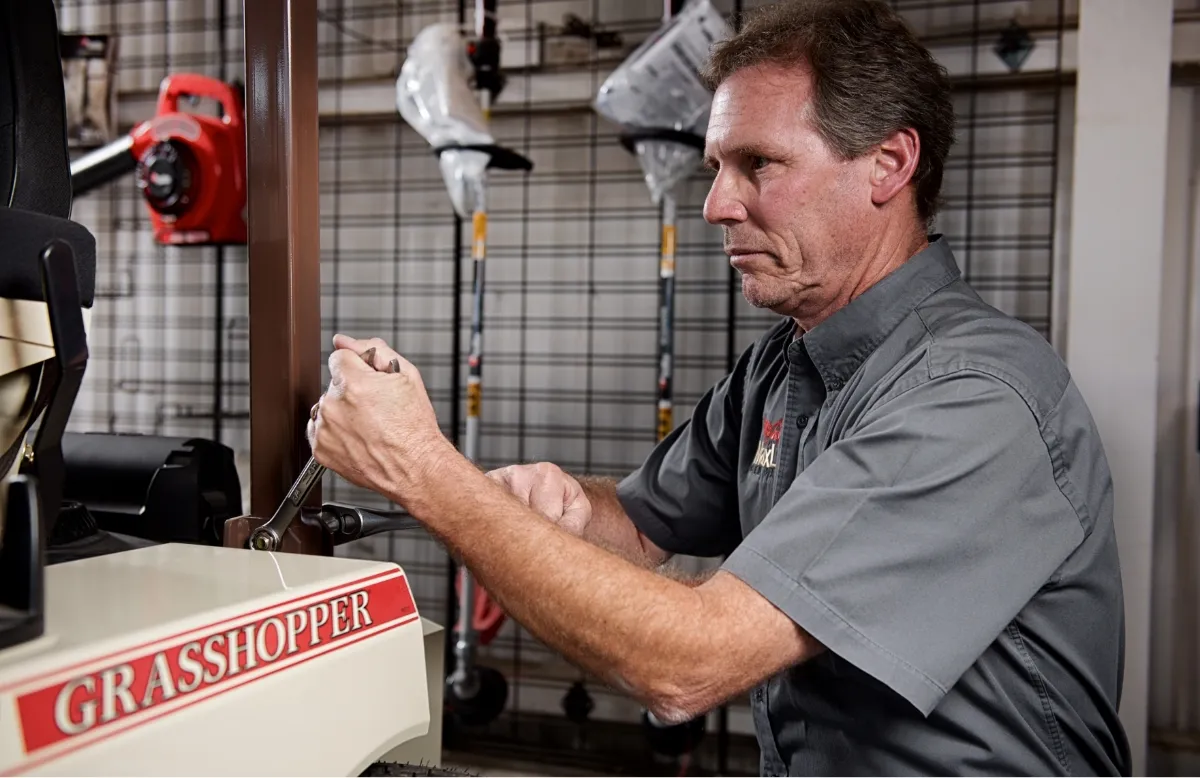
Mower maintenance includes routine service like sharpening blades, oil changes and air filters, but how a machine is built plays a big role in what that looks like over time. While all mowers require upkeep, the frequency, serviceability and severity of issues can vary significantly as hours add up.
Lower-tier machines tend to operate closer to their limits, especially on larger properties — more like sprinting than maintaining a steady pace. This added strain shows up in how components wear. Some entry-level mowers use sealed transmissions that aren’t designed to be serviced, making replacement the only option. Engine protection can also be simpler, with single-element air filters allowing more debris to reach internal components.
Premium mowers are built with longevity in mind. Transmissions are often serviceable, and higher-end engines typically feature dual-element air filtration for better protection in dusty conditions. Many also use OEM components designed to work together, helping extend the life of key systems.
Engine design matters, too. Liquid-cooled engines, common in premium models, require occasional attention but are built for sustained performance and can deliver significantly longer service life than standard air-cooled engines. The result is fewer unexpected repairs, longer service intervals and more consistent performance over time.
How important is parts availability?
Long-term ownership also depends on how easily you can service the machine. That can be when you need to access local dealer support and purchase Original Equipment Manufacturer (OEM) spare parts. These are key factors when keeping a mower running for season after season.
Serviceability and parts availability are important considerations that factor into the long-term cost of a mower, as well. Easy access to routine maintenance items, replacement blades, filters, belts, and other wear parts can reduce downtime when the grass is growing fast. Plus, a strong support network helps owners spend less time waiting on repairs and more time getting work done. For Grasshopper owners, GrasshopperParts.com offers a direct source for genuine parts and accessories designed to keep equipment performing as intended.
Where do performance gaps show up most in mowers?
Cut quality is one of the first red flags you’ll notice, especially if you’re mowing thick grass or rougher back acreage, where a more robust cutting deck and blade system can maintain a cleaner, more consistent finish.
Uptime is another key factor. Machines built for heavier workloads are less likely to overheat or require mid-season repairs.
Operator comfort also enters the purchase picture. Smoother handling, better balance, and reduced vibration contribute to less fatigue over longer mowing sessions.
All together, these differences influence not just how the mower performs, but how efficiently you can get the job done.
Plus, there is a frustration factor to consider. If you’re frequently dealing with service and repairs and not getting the results you expect, it can quickly turn a routine chore into a time-consuming hassle.
What factors contribute to mower return on investment?
Beyond purchase price, the return on investment for a mower also includes the total cost of ownership for the life of the machine. Lower-priced mowers are not designed to last as long as premium machines. So, during an average 10- to 15-year lifespan for a premium mower, you could end up buying several lower-end models and ultimately spending more.
With a higher-quality machine, you’re more likely to avoid frequent repairs, performance frustrations, and downtime during the busiest parts of the season.
What’s the best way to balance upfront mower cost and long-term value?
Budget always plays a role, and for some buyers, a lower upfront cost is necessary. But even within a set budget, it’s important to maximize value. Choosing the most robust machine within your price range rather than the least expensive option can extend usability and delay replacement.
Also keep in mind, financing can help bridge the gap, allowing buyers to invest in higher-quality equipment while spreading out the cost. When paired with strong warranty coverage, this approach can provide added peace of mind during the payback period of the loan.
The bottom line: pay more now or even more later.
Sure, a lower upfront price may save money today. But a mower built to last can deliver greater value over time with fewer interruptions and more consistent results. This way, you can spend less time dealing with repairs and more time enjoying your property.
Ready to upgrade your mower and mowing experience? Let’s talk. Visit us and click on Find a Dealer. Or, take our quiz and find out the best mower for you.
.jpg)